
Inked & Queer: LGBTQ+ Symbols, from Secrecy to Pride
Written by Quill Mohrfeld
Black Heart Tattoo & Gallery
June 4, 2026
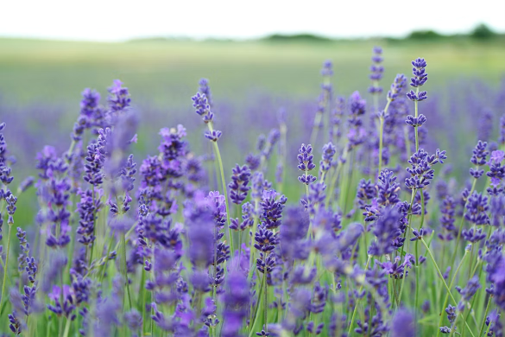
For generations, queer people relied on subtle symbols to recognize one another in societies where open expression could be dangerous. Flowers like lavender and violets became part of a coded visual language tied to identity, intimacy, and resistance. Lavender grew into a symbol of queer activism and reclamation, while violets carried sapphic associations dating back to the poetry of Sappho. These symbols appeared in fashion, literature, gifts, and eventually tattoos: quiet signals understood within the community, yet often invisible to the wider public.
Today, queer tattoos continue that tradition. A small lavender sprig or violet tattoo can look purely decorative while carrying deeply personal meaning tied to history, identity, and survival. As queer culture has become more visible, these symbols have shifted from secret codes into acts of remembrance and pride, connecting modern tattoo culture to generations of hidden queer history.
| A Brief Timeline of Queer Symbolism |
| ● c. 600 BCE: Violets become associated with Sappho, whose poetry inspired later sapphic symbolism and contributed to the origins of the terms “sapphic” and “lesbian.”
● 1890s: Green carnations become linked to queer identity through their association with Oscar Wilde. ● 1930s–1940s: Lavender emerges as coded language associated with homosexuality and gender nonconformity. ● 1930s–1940s: The pink triangle is used by the Nazi regime to identify and persecute gay men in concentration camps. ● 1960s: Bara (薔薇, meaning “rose”) becomes associated with gay male culture in Japan and later appears in queer publications and art. ● 1970s: Several enduring queer symbols emerge or are reclaimed:
● 1978: Gilbert Baker designs the first rainbow Pride flag for the San Francisco Gay Freedom Day Parade. ● 1970s–Today: The rainbow flag evolves into a global LGBTQ+ symbol, later expanding into newer designs such as the Progress Pride flag to emphasize inclusion and intersectionality. |
For much of modern history, queer identity had to exist in secrecy. In many countries, homosexuality was criminalized, classified as a mental illness, or punished through public humiliation, ostracization, imprisonment, and violence. Police raids, censorship laws, and moral panic campaigns targeted LGBTQ+ communities, making open expression dangerous and, in some cases, life-threatening.
Against that backdrop, queer communities developed subtle ways to recognize one another without attracting unwanted attention. Flowers, colors, phrases, and accessories became tools of survival and connection. Violets carried sapphic meaning through artistic and literary traditions linked to Sappho, while lavender evolved into a broader symbol of queer solidarity and resistance. Other signals emerged through fashion and slang: green carnations referenced Oscar Wilde, and coded phrases like “Are you a friend of Dorothy?” allowed gay men to discreetly identify one another in public spaces. Over time, these hidden symbols evolved into visible markers of pride, influencing everything from protest movements to modern queer tattoo culture.

Lavender’s connection to queer history began long before it appeared in Pride imagery. Because the color sits between traditionally gendered pink and blue, it became associated with gender nonconformity and homosexuality during the twentieth century. In the United States, anti-LGBTQ+ hysteria during the 1950s fueled the “Lavender Scare,” a campaign that targeted thousands of suspected gay government employees under the belief that they posed security risks. The color lavender became tied to suspicion and stigma, reinforcing the idea that queer people were threats to public morality and national stability.
Rather than abandoning the symbol, queer activists reclaimed it. In the 1970s, lesbian feminists transformed the term “Lavender Menace,” originally used dismissively by some within the women’s movement, into a statement of solidarity and resistance. Since then, lavender has evolved into a symbol of queer pride, resilience, and remembrance. Today, lavender tattoos and floral imagery often function as quiet tributes to that history, connecting personal identity to generations of activism and survival.
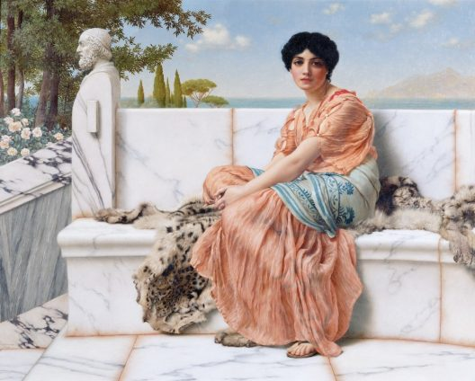
Long before modern Pride symbols existed, violets became associated with love between women through poetry, literature, and coded cultural references. The connection is most often traced back to Sappho, whose writing frequently referenced violets while expressing affection and desire between women. Over time, violets became linked to sapphic identity through art and literature, eventually appearing in lesbian culture as a discreet but recognizable symbol.
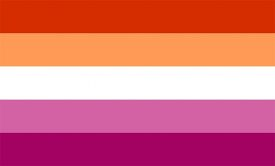 |
Because violets were viewed as feminine, romantic, and artistic, they worked well as coded signals during periods when queer relationships had to remain hidden. Like many queer symbols, violet imagery was sometimes weaponized against women-loving women before later being reclaimed as an expression of identity and solidarity. Today, violet tattoos and floral motifs continue that tradition, connecting contemporary queer aesthetics to a much older history of coded sapphic expression. |
As LGBTQ+ visibility expanded in the late twentieth and early twenty-first centuries, queer symbols became more public while still retaining their role as tools of recognition and identity. The rainbow Pride flag evolved into one of the most recognizable modern queer symbols, later expanding into newer versions like the Progress Pride flag to emphasize inclusion of trans people and queer people of color. Alongside flags, smaller everyday signals emerged through accessories and fashion: pronoun pins, queer-coded jewelry, carabiners associated with lesbian culture, and even stereotypes surrounding Subaru became part of a shared cultural language. These references often function less as strict identifiers and more as subtle cues, community in-jokes, or ways of signaling belonging.
Tattoos continue this tradition by balancing visibility with ambiguity. Symbols like nautical stars, labrys axes, the lambda, and reclaimed pink triangles carry deep historical meaning within queer communities while remaining visually understated to outsiders. A tattoo can function simultaneously as decoration, personal history, and cultural signal. It’s something openly worn without necessarily disclosing its meaning to everyone who sees it.
Even as LGBTQ+ visibility has increased, queer symbols still matter because visibility has never guaranteed safety. Pride flags in windows, pronoun pins, and queer tattoos can help people identify supportive spaces and communities, especially during periods of political hostility or rising anti-LGBTQ+ rhetoric. Throughout history, queer symbols have existed not only as expressions of identity but also as ways to find safety, solidarity, and recognition in environments where openly identifying oneself could carry real risk.
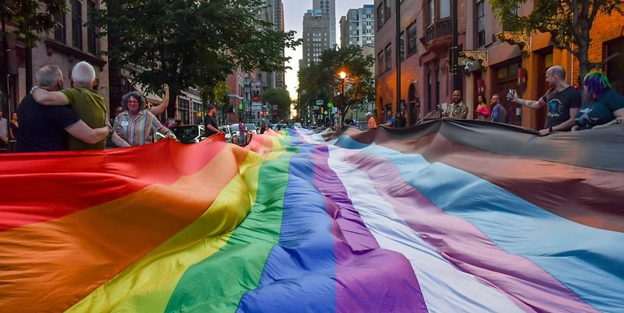
Pride marches, flags, and tattoos continue the tradition of reclaiming visibility from oppression. At the same time, queer symbols help preserve and cultivate culture across generations, connecting younger LGBTQ+ people to shared histories, aesthetics, and communities. Whether displayed loudly through protest art or quietly through a small tattoo, these symbols remain acts of recognition, resilience, and belonging.
Stay safe, friends.
Sources:
“Are You a Friend of Dorothy? Folk Speech of the LGBTQ Community” by James Deutsch, June 29, 2021. Smithsonian Center for Folklife & Cultural Heritage.
https://www.smithsonianmag.com/blogs/smithsonian-center-folklife-cultural-heritage/2021/06/29/are-you-friend-dorothy-folk-speech-lgbtq-community/
“LGBTQI+ symbols and their meanings” by Gillian Murphy, February 8, 2024. People’s History Museum.
https://phm.org.uk/blogposts/lgbt-symbols-meanings/
“Queer Histories: The Symbols and Meanings of Flowers” by Syaa Liesch, November 3, 2024. Gender Justice Project.
https://genderjusticeproject.org/lgbtqia/queer-histories-the-symbols-and-meanings-of-flowers
“Congressional Investigations and the Lavender Scare” by Judith Adkins, Summer 2016. Prologue Magazine via the National Archives.
https://www.archives.gov/publications/prologue/2016/summer/lavender.html
“Inside the Tight-Knit, International Chosen Family of Queer Tattooers” by Wren Sanders, November 27, 2019. Them.
https://www.them.us/story/smallshop-queer-tattooers
Additional Resources:
https://www.hrc.org/resources
https://www.thetrevorproject.org/resources/
https://glaad.org/reference/
https://www.loc.gov/lgbt-pride-month/resources/
https://americanhistory.si.edu/explore/topics/lgbtq-history
